


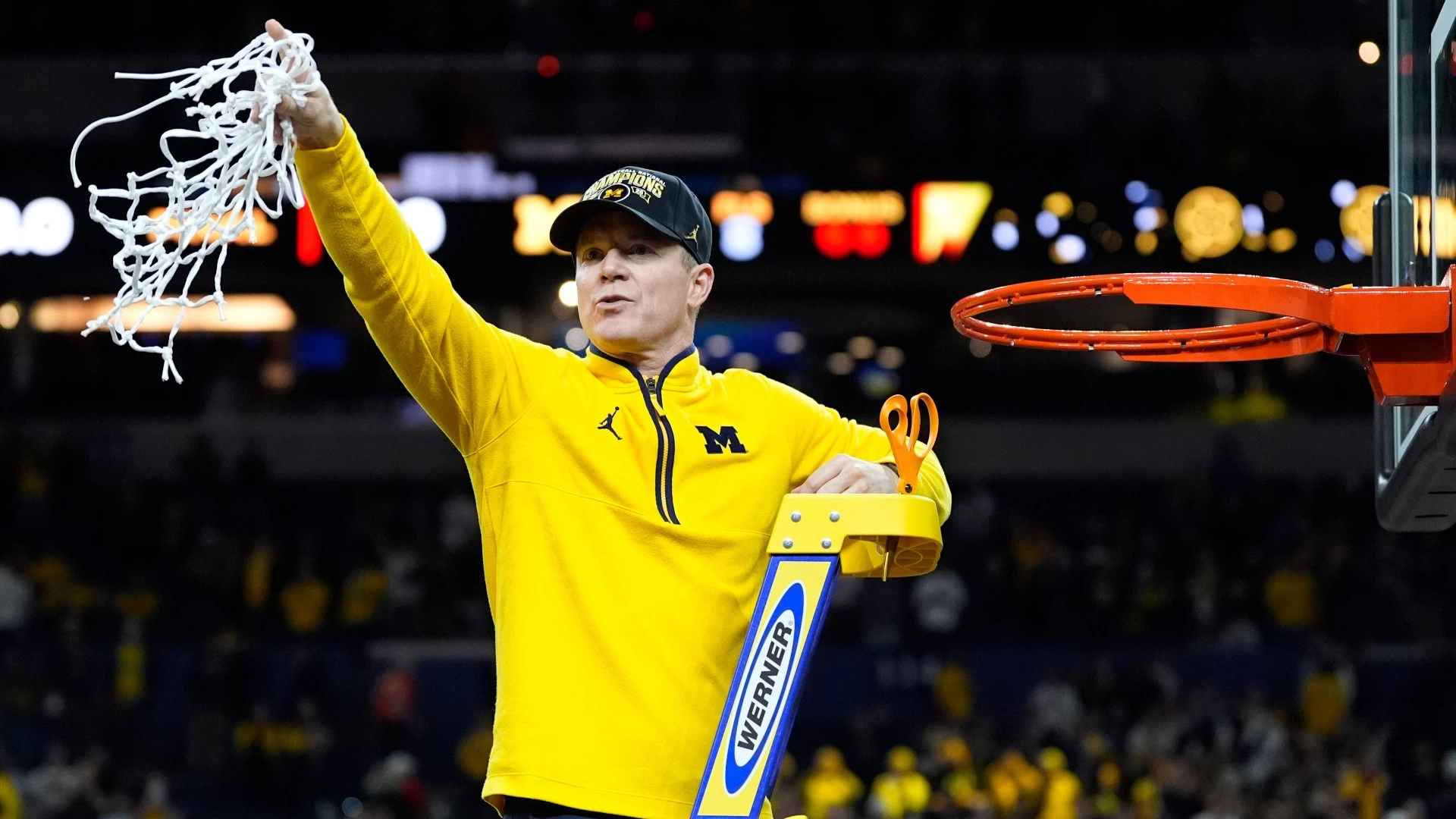
Michigan Wins National Championship with Team of Transfers
Segment Spotlight: Quick Hits From The Craig Carton Show
Congratulations to March Madness Champion and Analysis of Michigan’s Victory
Congratulations are in order for Tyrone, the current March Madness champion on the Craig Carton Show, after correctly picking Michigan as the tournament winner. While Michigan did secure the win, they did not cover the point spread, which had been a point of contention.
Michigan, notably the most dominant team in the tournament, emerged victorious with a six-point lead. However, it wasn’t an easy win, as UConn fiercely held them to more than 20 points below their scoring average. Michigan, typically prolific from the three-point line with an average of 11 three-point shots per game, was limited to just two in the final game. Despite UConn’s struggle with their shooting accuracy, particularly from beyond the arc, coach Danny Hurley had accurately set the target for his team: 12 or 13 three-pointers to clinch the win.
The Role of Transfers and Financial Investments in College Sports
Another focal point from last night’s game was Michigan’s starting lineup, which featured five transfer players. These players, none of whom began their collegiate careers at Michigan, collectively earn about $10 million, stirring discussions about the impact of money on college sports. However, this setup was not new for the tournament, as these players have been part of the team throughout the season.
The discussion on the show dispelled the notion that financial investments in sports are detrimental. Instead, it was argued that Michigan’s strategy of utilizing wealthy transfers is a beacon of hope for other Division I schools. The narrative suggested that other universities could likewise achieve success if they find willing alumni to invest in their programs. This, in turn, democratizes the potential for winning, moving away from a landscape dominated by traditionally elite programs.
Indeed, discussions extended to the inefficiencies in how universities manage their sports budgets. For instance, despite Syracuse University making $30 million in net profit and having significant endowments, their NIL (Name, Image, Likeness) program’s funding remains low, prompting them to request donations from wealthy alumni. This scenario highlights possible areas for improvement in how schools leverage their financial resources to enhance their athletic programs.
The segment concludes by emphasizing that the opportunities created by this financial paradigm can extend to all schools, not just the traditional powerhouses, shifting the dynamics of college basketball fundamentally.
BETTING NEWS
FUTURES

