


Miami Hurricanes' Rise Amid College Football's Parity

Marcelino Ortiz
Host · Writer
Segment Spotlight: Quick Hits From LatiNation Sports
Miami Climbs the Rankings as College Football’s Conference Race Takes Shape
Parity has defined college football this year. Traditional marquee programs such as Alabama, Ohio State, Notre Dame and the University of Miami are still doing well, but several one-loss teams are in the top 10. The number one team has lost in recent weeks, while four or five other top-10 teams, including Georgia and Texas, lost last week.
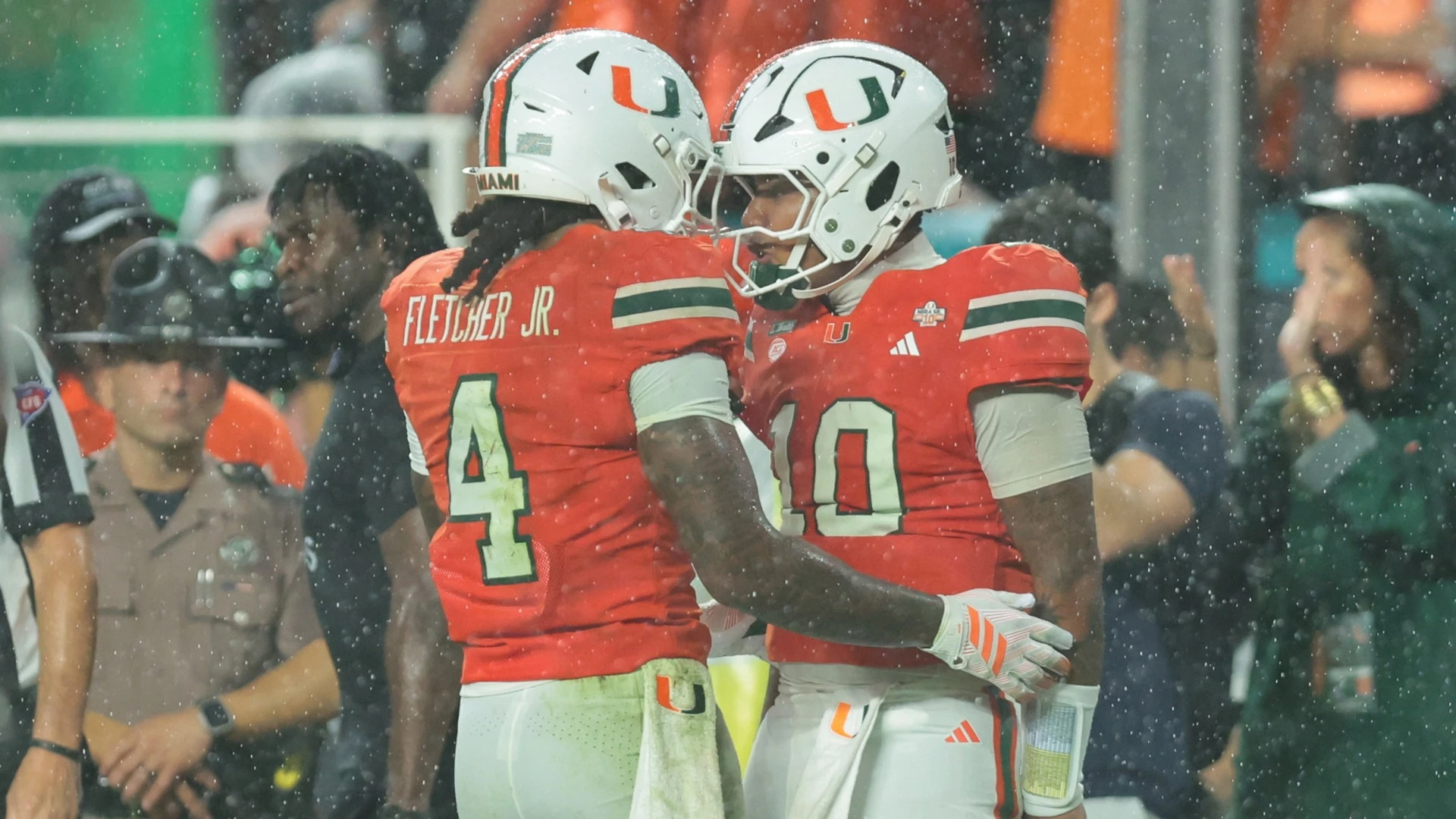
Miami moved to the top of the AP Top 25 after securing an overtime win over Florida State. Ohio State defeated Indiana after losing earlier in the season, while Notre Dame lost to BYU. Brigham Young University is now ranked second.
Miami’s upcoming games include Pittsburgh and a major matchup with Notre Dame. In the 1980s, the Miami-Notre Dame rivalry was known as “Catholics versus Convicts,” with Notre Dame representing the Catholics and Miami representing the Convicts. Miami brought its distinctive swagger to college football during that era.
The University of Miami is a small private school with significant booster support and is one of the biggest NIL spenders. Its sports teams also have strong local ties. Many players come from Miami-area high schools, giving local fans the opportunity to support athletes from their own schools and communities.
That connection helps the city rally behind the Hurricanes when they are winning. The team recently drew a sellout crowd for a game against Florida State despite a monsoon rainstorm. Miami appears to have one of the most complete teams, including a quarterback, and excitement around the program is building.
College football’s Division I FBS includes many conferences, with four major leagues described as the Power Four: the SEC, the ACC, the Big Ten and the Big 12. Miami competes in the ACC. The winners of those four conferences receive automatic bids to the college playoffs, along with the highest-ranked champion from the other conferences.
Conference games are played against teams within the same group. A strong conference record is important because teams want to win their conference and secure an automatic playoff bid. Non-conference games still count toward a team’s overall record and ranking.
Major programs often schedule high-profile non-conference opponents to improve their rankings, while also adding games against teams from lesser divisions. Schools negotiate these matchups, and schedules are often arranged years in advance.
College football is also seeing the formation of super conferences. There was previously a Power Five, but the Pac-12 was reconsolidated as programs such as Oregon, UCLA and USC moved to the Big Ten. Despite its name, the Big Ten now has far more than 10 teams.
Major conferences also negotiate television rights and split the revenue among their members, allowing smaller programs to benefit from the presence of larger teams. Notre Dame remains independent because it is big enough to maintain its own television rights agreement with NBC and does not want to join a conference.
BETTING NEWS
FUTURES

