


Notre Dame Schedule Scrutiny and AP Poll Double Standards

Kevin Walsh
Host · Writer
Segment Spotlight: Quick Hits From SportsGrid College Football Today
Notre Dame’s Schedule Draws Scrutiny as Other Contenders Avoid the Same Criticism
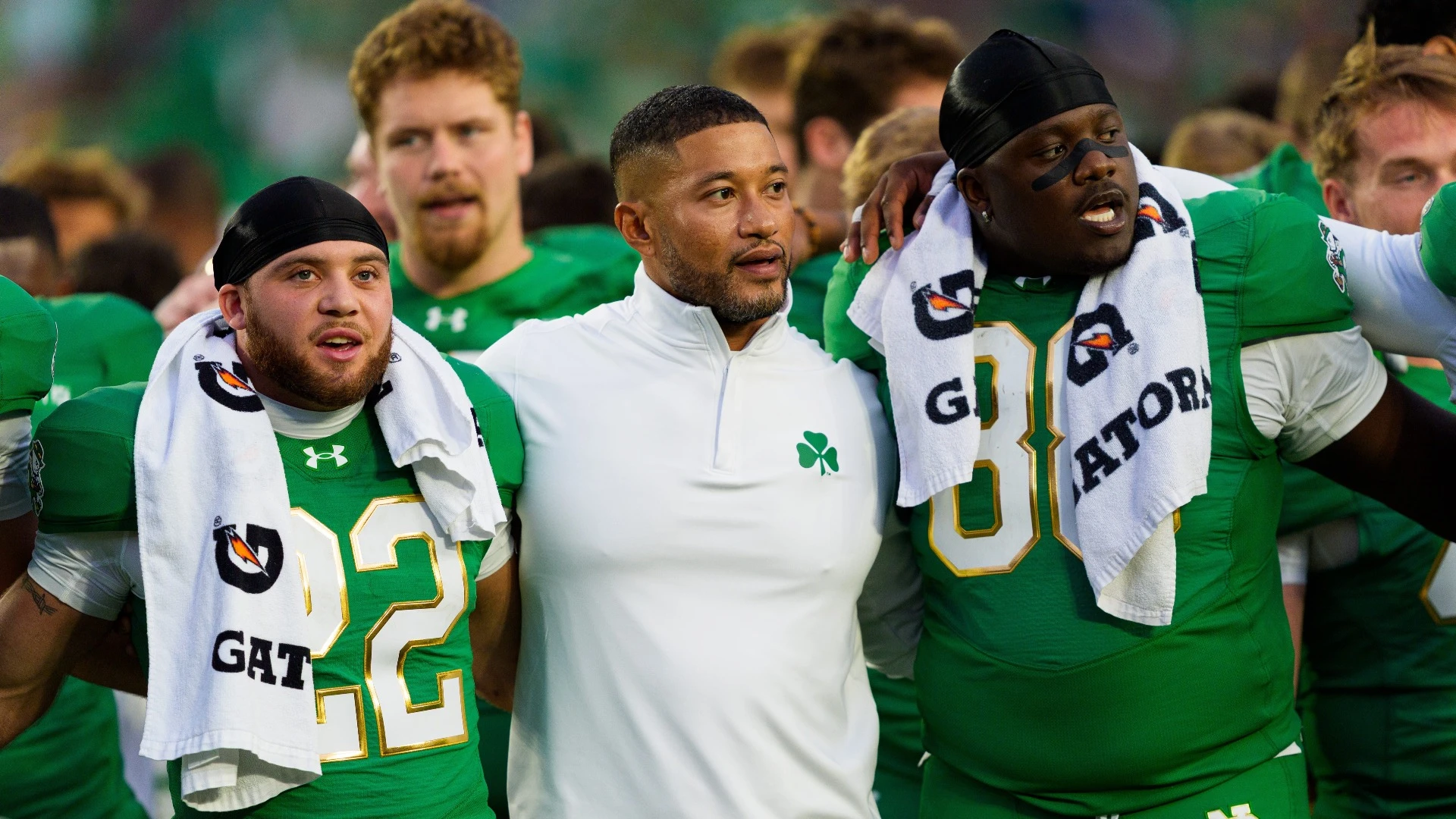
Notre Dame’s schedule has come under intense scrutiny, but the same standard does not appear to be applied across the AP poll. The poll can be treated as entertainment, but it also becomes a source for arguments about the best teams.
Miami’s schedule is a joke, and the Big 12 schedules are no better. Some of those teams barely play one another. The Utah-Houston game almost feels like an accident. BYU’s schedule looks good because it played Notre Dame, just as playing Notre Dame helped Miami last year.
The ACC is terrible. Outside of Miami, Wake Forest’s claim to fame is losing to Miami by 17. SMU was ranked until it played Notre Dame. Notre Dame beat SMU, and then the conversation became that SMU was never good.
During the Duke-Virginia game, the play-by-play announcer perfectly described the matchup as two teams competing to be upper middle class in the ACC. Duke and Virginia represent the conference’s upper middle class, which says plenty about the state of the league.
BYU did not play anybody, and the Big 12 does not play anybody. Yet in the week leading up to the BYU-Notre Dame game, Notre Dame’s schedule remained a major topic. When someone predicted that Miami would be No. 1 and BYU No. 2 in the next AP poll, it seemed impossible. That was exactly what happened because other teams lost and pollsters simply moved Miami and BYU up.
Miami and BYU are not going to play for the national title. Maybe the inability to identify the best teams is an argument for expanding the field to 24. The concern is not that teams ranked 18th through 24th would suddenly become title contenders. It is that two legitimate contenders could be ranked 19th and 21st, while teams ranked 10th, 11th and 13th could be among the worst in the field.
It is also unclear whether the committee considers the odds when making its decisions. After last year, it is difficult to know what the committee looks at, if anything.
BETTING NEWS
FUTURES

