


USC Football's Shift Under Lincoln Riley: Identity Crisis?
Segment Spotlight: Quick Hits From Outspoken With Dan Sileo
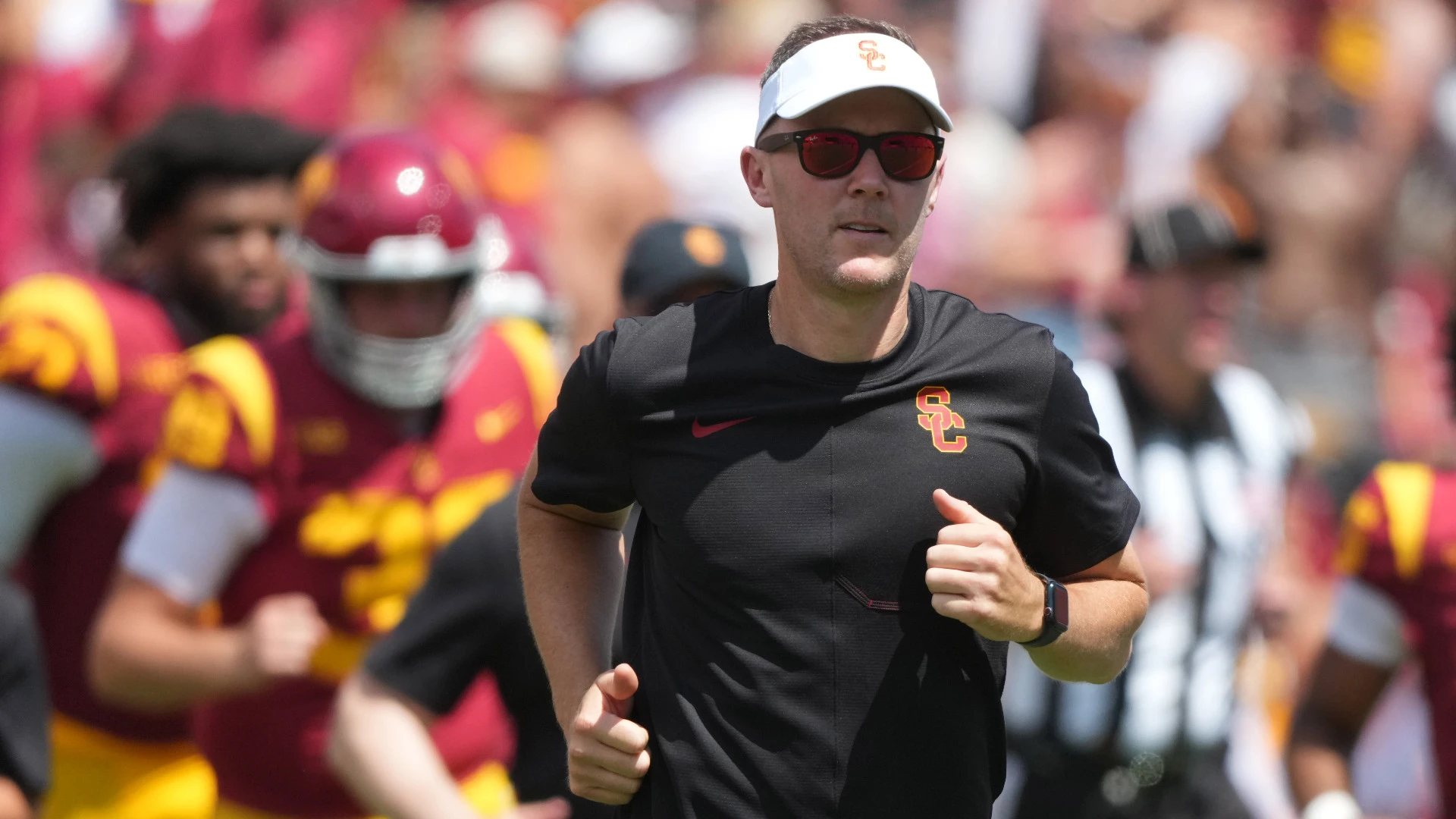
USC Football's Shift Under Lincoln Riley: A Departure from Tradition
The USC Trojans football team has been widely recognized for its formidable representation of power football, a legacy that has waned under the direction of coach Lincoln Riley. Historically, USC was synonymous with physical dominance and intimidation on the football field, embodying a style that contributed to its brand for over six decades. This style was deeply ingrained in the team's identity, from the era of legendary coaches to the innovation of plays like the student body right.
However, under Riley's tenure, there has been a notable shift toward a more open, less physical style of play, characterized by 7 on 7 drills and a focus on entertainment rather than physical dominance. This approach, while entertaining, diverges significantly from the traditional power football that USC was known for. Concerns have been raised regarding the effectiveness of this new style, as it seemingly lacks the physicality that once intimidated opponents.
The dismay among long-time observers and fans stems from a noticeable shift in the type of players highlighted in the team. In the past, USC celebrated its offensive linemen as the stars—figures like Tony Boselli, Bruce Matthews, and Roy Foster stood as pillars of the team's toughness. These players were not just participants but were considered to be among the all-time greats, embodying the true spirit of USC football.
The current strategy employs talents like Caleb Williams to execute a game based on speed and agility rather than the brute force associated with the team's heritage. This shift has led to skepticism and a loss of trust among the fanbase, as they perceive the current playbook as a stark contrast to the USC they grew up admiring. The essence of what made USC a powerhouse—akin to other historic programs like Michigan, Ohio State, and Alabama—seems to be fading, leaving fans nostalgic for the days when being an offensive lineman at USC was a badge of honor.
This evolution in style has not only affected public perception but also touched the hearts of former players, many of whom express private concerns about the team losing its true essence. As USC moves forward, it faces the challenge of balancing modern football demands with the powerful legacy upon which its historical dominance was built.



BETTING NEWS
FUTURES

