


Analyzing Team Size and Strategy in National Title
Segment Spotlight: Quick Hits From The Bobby Carpenter Show
Analysis of College Football Playoffs and Game Dynamics
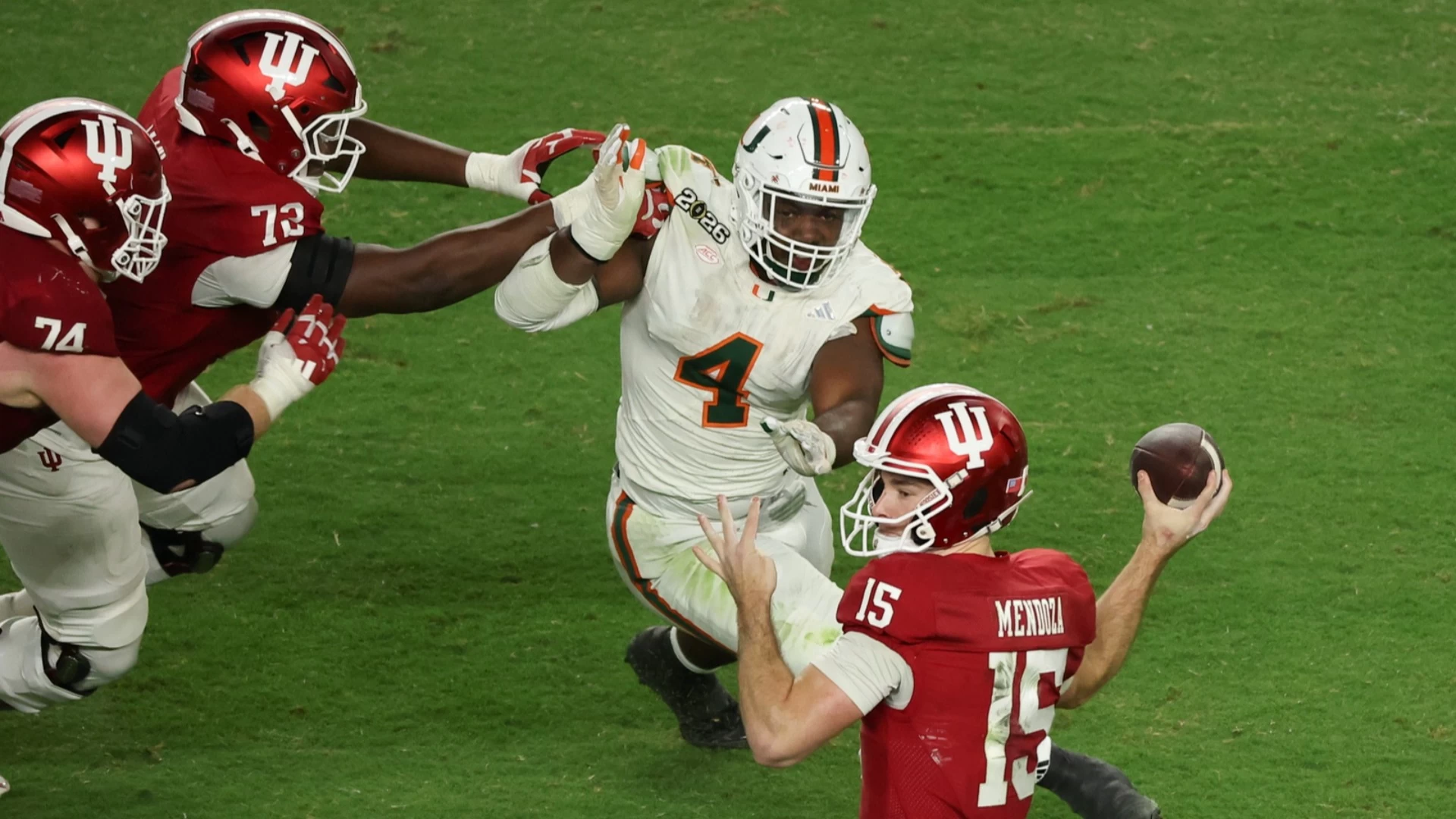
The discussion on the Bobby Carpenter Show highlighted the contrast in team dynamics between Miami and Indiana, with a focus on their respective line sizes and player performances. Miami's sizable offensive line, featuring players like Francis Mawagoa and Markell Brown, was a central topic, particularly in how Indiana managed to effectively counteract this advantage. Indiana's defensive strategy allowed them to fill gaps effectively, showcasing their resilience and strategic gameplay.
Key players such as Ruben Bain from Miami displayed exceptional skills that caught the audience's attention, especially in disrupting plays and setting up critical runs. Indiana’s defensive backs were praised for their tight coverage, which minimized separation and limited Miami’s offensive options. Offensively, players like Charlie Becker stepped up in crucial moments, reinforcing Indiana's reputation for making big plays when it mattered most. The coaching prowess of Kurt Cignetti was also noted for leading Indiana through a remarkable season, emphasizing his unique approach to team management and talent development.
Further discussion addressed the potential implications of expanding the college football playoffs from a 4-team format to a 12-team setup. This change is expected to create more opportunities and a more level playing field, potentially allowing for a wider rotation of teams reaching the playoffs. The incorporation of the NIL and transfer portal could similarly impact team compositions and competitive dynamics. The segment explored whether these changes could lead to an NFL-style rotation where more teams have a shot at the championship, or if the power might remain concentrated among a select group of top-ranked teams.
Finally, the conversation touched on the optimal number of playoff spots, debating the merits of a 16-team playoff system to avoid diluting the competitive quality while providing adequate representation and opportunity for various teams. Issues such as playoff scheduling and the impact of layoff periods on team performance were also discussed, highlighting the need for adjustments to the current model to foster fairness and maintain high competition standards.



BETTING NEWS
FUTURES

